Posts

Showing posts with the label Japan

Nikko

Image
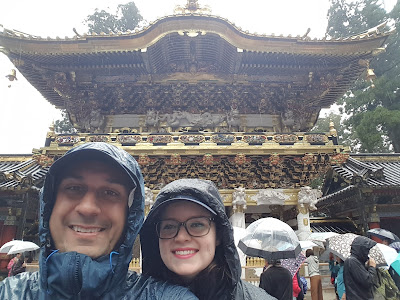
Jason and I knew that we wanted to do a day trip to Nikko from Tokyo.  Unfortunately, Nikko had rain in the forecast for every day we were in Tokyo.   To get there, it required that we took a shinkasen from the main train station and then get on a local train.  It turned out that the shinkasen we needed to take home was a major commuter option, so the original option we wanted was booked.  This is the only time we had any issues with booking the tickets we needed to.   I have bundled three temples that we visited into one larger post for simplicity.  We visited: Toshogu Taiyuinbyo Rinnoji We also visited the Kanmangafuchi Abyss. I will start with Toshogu as this was the largest draw to Nikko and also one of the most impressive things we saw while we were in Japan (and it had pretty serious competition).   Toshogu is the shrine and mausoleum dedicated to Tokugawa Ieyasu, the founder of the Tokugawa shogunate, ...
Naiku - Inner Shrine - Jingu

Image
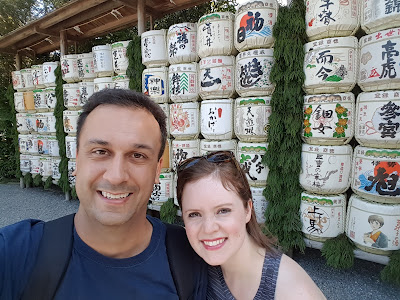
After we visited the Geku, we hopped on a bus to Naiku , also known as Ise-Jingu or simply Jinga.  All other Shinto shrines in Japan are known as XX Jingu,  This one is simple Jingu -- the ultimate. Like all great shrines, this one had a magnificent wall of sake barrels.   This ended up being the Christmas card photo! This shrine was even larger than the outer shrine and we spent quite some time wondering from shrine to shrine.  The bridge into the shrine was beautiful.  We wish we had known what the flags represented/said. From these photos, you can see the crowds of people at the main shrine.   We thoroughly enjoyed our time here.  It was something to see the most holiest place for Shintos. Time at shrine: 1.5 hr Times visited: 1 Overall: A-

Geku - outer shrine

Image
Our first stop in Ise was the Geku , or outer shrine of the Ise Shinto Shrine.  This is the second most sacred location.  We ended up with a gorgeous day although it did turn rather warm! This shrine is about a 15 minute walk from the Ise train station. I am going to cover a few things in this post that are also applicable to the Geku shrine.  The main shrine building gets rebuilt every twenty years with all new materials.  You can see next to the temple the place that it was before.  It has been rebuilt 62 times making the shrine 1240 years old, founded in 4 BCE.  No photographs are allowed within the area of the main shrine at both shrines.  The style of these two shrines is very different from the other shrines we visited -- they both were built pre-interaction with other cultures (like China and Korea).   The main shrine within Geku -- this was the closest photograph I could take All these structures get rebuilt every twenty ...

Futami-Okitama Shrine

Image
I knew when we were headed to the Ise Peninsula that I just had to get to the Futami-Okitama shrine as well!  It is the home of the "married rocks," a shrine to married couples and bliss.   We took a bus from the Inner Shrine, Naiku, to the shrine.  It was so easy -- only about a 15 minute bus ride.  We then caught the train back from here, so it was a really easy day and we covered a bit of ground. The rocks are really not that large -- probably only about 10-15 feet high.  Here is a picture with us in it for comparison This does seem to be one of the most famous spots in Japan at least for photographs.  It is definitely more challenging to get to them Miyajima, but maybe not by much.  From Kyoto, we got to Kyoto station and took a shinkasen.  We then transferred to a local train to end up at Ise (but we could have continued on the train to end up here).    Other than the rocks, this was a relatively quick visit!...

Fushimi Inari Taisha

Image
Okay, last post about Kyoto!  One of the most famous sights in Kyoto, even all of Japan is the Fushimi Inari Taisha . I recommend you click the link to see pictures of what the temple looks like when it is empty -- because it definitely will not look like that when you are there! This shrine is famous for the thousands of red torii gates that are on the property.  Each gate has a wish or prayer on it from local businesses. Inari is the shinto god of rice, very important to the Japanese with the fox being its messenger.  Thus this shrine has many statues of foxes, which tend to have red bibs on. I was surprised at how big this shrine was; I also had not realized that it did have quite a hike in the back.  We did a bit of one, but had not timed this visit well with lunch. Map of the grounds.  We got up about half way before the big circle starts   The torii gates are everywhere and all sizes.  It can cost up to 1M JPY to purchase one...

Kiyomizu-dera

Image
We visited the Kiyomizu-dera at the end of one of our larger sightseeing days (villa in the morning, Fushimi-inari around lunch).   The stroll up to the temple is beautiful.  It sits up the hill with its back to a larger hill behind it.  We realized this hill is why we had not seen this temple until we were specifically coming to it. The temple is a series of buildings and beautiful pagodas.  Unfortunately, we did not get great photos of the main hall as it is under construction for the next 2-3 years.   The temple is considered "Kyoto-ians temple" and while the temple was originally associated with Hosso Buddhism, it spun off into its own sect in 1965.  We saw many beautiful saris and school children here.  It was a school holiday, so we believe it was maybe slightly more crowded than usual. View of the street leading up to the temple Statue at the front of the temple -- unclear what it is exactly, but its enough to see ...

Kinkaku-ji

Image
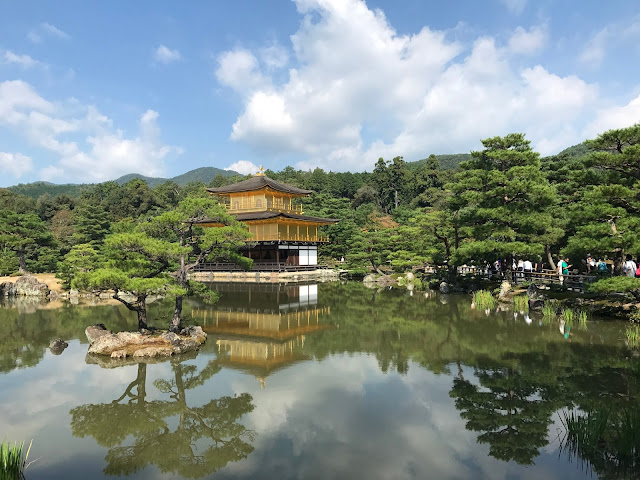
We knew we had to visit Kinkaku-ji -- also known as the Golden Pavilion.  It was a bit of a haul to get there.  BUT we paid our temple admission, and you walk about 100 meters and are met with this view: The Golden Pavilion does not mess around! Other than seeing the pavilion, the rest of the temple was a little anti-climatic.  That being said, you come for the pavilion, so it was nice to somewhat get in and get out. We did have fun visiting it though!  It's hard to believe how much gold is actually on the pavilion.  The reflection is stunning.   Time at temple: 45 minutes: Times visited: 1 Overall: A-